
Network Camera System: Scalable Video Surveillance Solutions for Modern Organizations
A modern network camera system gives organizations more than video coverage. It delivers real-time visibility, intelligent alerts, stronger incident response, and a scalable foundation for protecting people, assets, and critical operations across one or multiple facilities.
When organizations think about security, they often start with cameras. In reality, cameras alone are never the full answer. What truly improves security is a well-planned network camera system that combines high-definition video, smart analytics, remote access, reliable storage, and a design strategy tailored to the facility itself.
In my experience, high security is one of the main priorities for almost every organization, whether the site is a corporate office, warehouse, industrial plant, healthcare facility, school campus, or commercial building. The real value of modern surveillance is not just recording footage. It is about creating continuous monitoring, intelligent analytics, and recorded evidence that support faster response, better visibility, and stronger operational control.
That is why a modern video surveillance deployment should be approached as a complete solution rather than a hardware purchase. At Camintek, we focus on designing and implementing scalable CCTV and IP surveillance environments that support long-term performance. That includes planning the right coverage, defining a solid engineering and design strategy, ensuring the system runs on reliable IT network infrastructure, and supporting each deployment with proper structured cabling when needed.
This guide explains how a network camera system works, why organizations invest in it, what features matter most, how to choose the right architecture, and what separates a basic camera installation from a surveillance solution that actually performs.
What Is a Network Camera System?
A network camera system is an IP-based video surveillance solution built around cameras that transmit video over a network rather than through traditional analog infrastructure. Each camera becomes part of the organization’s connected environment, making it easier to monitor, record, manage, and analyze video from one or multiple sites.
You will also see this referred to as an IP camera system, network surveillance system, or IP security camera system. While the wording may change, the concept is the same: cameras, network connectivity, storage, and software working together as a more intelligent security platform.
How It Works in Modern Video Surveillance
A typical deployment includes IP cameras, switching and connectivity, video management software, recording or storage infrastructure, and user interfaces for monitoring and playback. Depending on the project, that environment may be on-premise, cloud-managed, or hybrid.
Each camera captures video and sends it through the network to a central platform where authorized users can monitor live activity, review recorded footage, and configure alerts. In more advanced systems, analytics can detect motion, monitor defined zones, trigger event-based actions, and help teams focus on what matters.
In my experience, this is the point where organizations begin to see the difference between a basic camera setup and a true surveillance solution. Once teams can verify events in real time, access evidence quickly, and manage the environment remotely, the system becomes much more valuable than passive recording alone.
Network Camera System vs Traditional Analog CCTV
Traditional analog CCTV can still cover simple use cases, but it usually falls short when organizations need higher image quality, remote access, analytics, flexibility, or long-term scalability. A network camera system is better suited for modern security because it is easier to expand, easier to manage, and more capable of supporting operational needs beyond security.
In practical terms, an IP-based system typically gives you:
- Higher-definition video
- Smarter event detection and alerts
- Remote monitoring from desktop or mobile devices
- Better scalability across buildings or sites
- Easier integration with broader security systems
- More efficient management and future expansion
Why Organizations Invest in a Network Camera System
Most organizations do not invest in surveillance for just one reason. Security is usually the starting point, but the benefits quickly expand into incident response, operational efficiency, accountability, business continuity, and site-wide visibility.
A well-designed network camera system helps protect people, reduce blind spots, support investigations, and improve control across critical spaces. It also gives decision-makers the ability to see what is happening in real time, whether they are on-site or supporting multiple locations remotely.
Better Protection for People, Assets, and Operations
One of the strongest reasons to invest in modern surveillance is simple: organizations need to protect people, assets, and crucial operations. That can mean monitoring access to restricted areas, reducing theft, verifying activity in production zones, improving perimeter awareness, or strengthening after-hours visibility.
In my experience, the biggest shift happens when businesses stop thinking about cameras as isolated devices and start seeing them as part of a broader risk management strategy. The system does not just watch. It provides context, evidence, and confidence.
Real-Time Visibility and Faster Incident Response
A major advantage of a network camera system is real-time visibility. Teams can see what is happening now, confirm alarms faster, and respond before an event escalates. That matters in loading docks, parking areas, access points, hallways, warehouses, campuses, and perimeter zones.
Modern surveillance improves incident response because it reduces guesswork. If motion is detected in a restricted area, if there is an operational disruption, or if activity appears in a sensitive perimeter zone, the right people can verify the situation quickly and take action with better information.
Operational Efficiency Beyond Security
Organizations often discover that video surveillance adds value beyond security. Footage can support process review, dispute resolution, loading and receiving oversight, traffic flow analysis, and better coordination across facilities. In environments like logistics centers or manufacturing plants, video is often just as useful for operational awareness as it is for protection.
That broader value is one reason a network camera system can deliver a strong long-term return. It improves visibility not only when something goes wrong, but also during normal day-to-day operations.
Core Features of a Modern Network Camera System
Not every video surveillance solution offers the same level of performance. A modern network camera system should be built around features that improve visibility, reliability, and long-term usability.
High-Definition Video Monitoring
Clear imaging remains the foundation of effective surveillance. High-definition video helps security teams identify events, track movement, verify activity, and review recorded evidence with greater confidence. In practical terms, better image quality makes it easier to understand what actually happened and why.
Smart Analytics, Motion Detection, and Alerts
Smart analytics turn video into action. Motion detection, defined alert zones, tripwire rules, and event-based actions allow teams to focus on relevant activity rather than trying to monitor everything manually. The most effective deployments are configured around site-specific risks, not generic default settings.
In my experience, analytics deliver the most value when they reflect the environment. A warehouse, a healthcare facility, and a corporate campus all need different monitoring logic. That is why system configuration matters just as much as camera selection.
Remote Access from Desktop and Mobile
Remote monitoring is now essential for modern organizations. Security managers, operations teams, and authorized stakeholders often need to verify activity, access live feeds, review recordings, and respond to alerts without being tied to a single control room. A modern network camera system should make that process seamless.
Scalable Architecture for Growing Facilities
Scalability is one of the strongest advantages of IP-based surveillance. A well-designed system can support future camera additions, new buildings, new sites, and changing monitoring requirements without forcing a full redesign. This is especially important for organizations that expect growth or need to centralize oversight across multiple facilities.
Types of Cameras in a Network Camera System
The right surveillance strategy usually includes more than one camera type. Coverage needs, lighting conditions, risk profiles, and facility layout all influence which devices make the most sense.
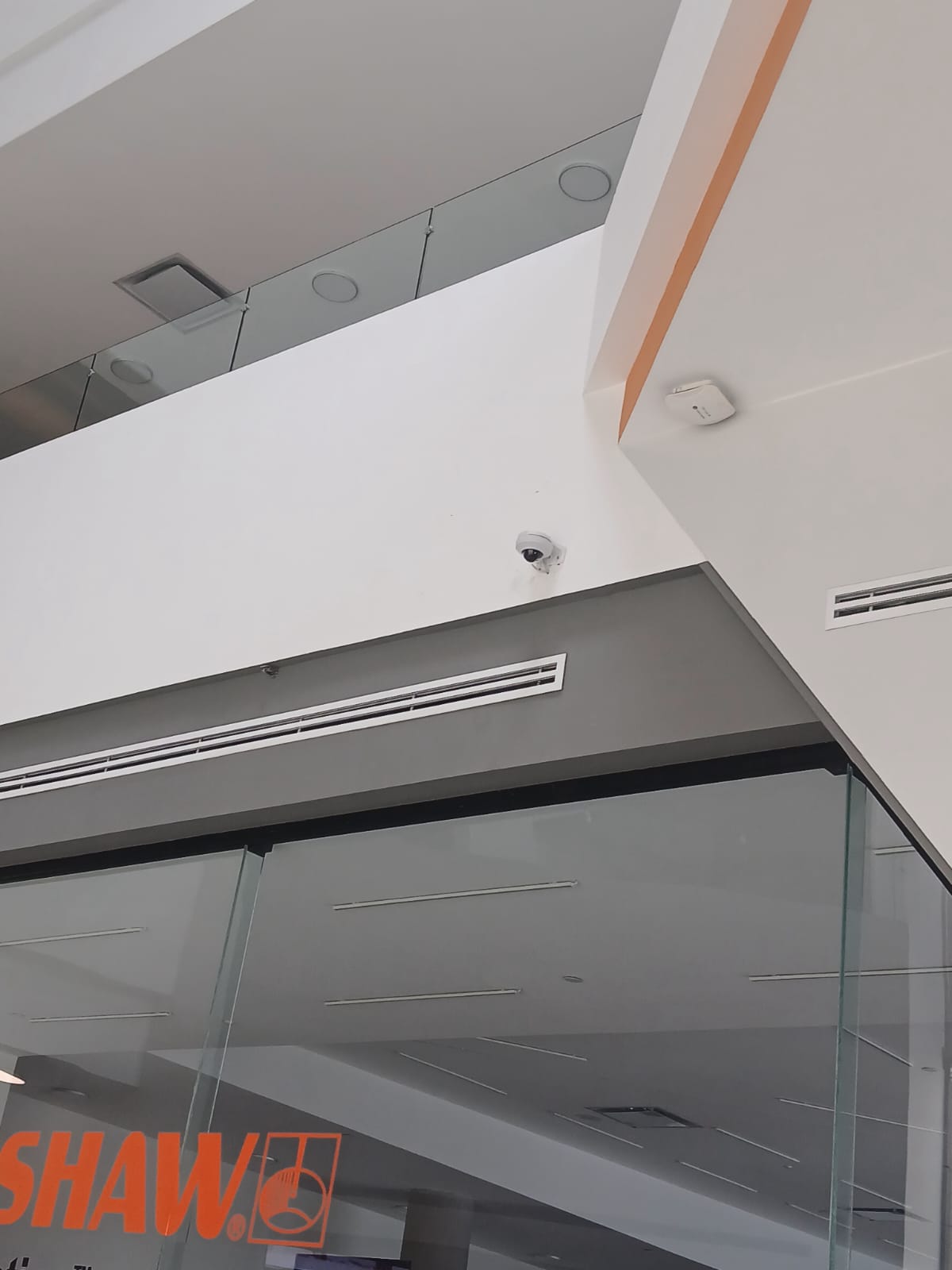
Dome Cameras
Dome cameras are common in offices, schools, retail spaces, and indoor public environments. They provide a compact, professional look and can support wide-area indoor coverage where aesthetics and discretion matter.
Bullet Cameras
Bullet cameras are often used for outdoor areas, perimeter zones, parking lots, and directional coverage. They are ideal when the goal is to watch a gate, fence line, driveway, loading area, or long corridor with a clearly defined field of view.
PTZ Cameras
PTZ cameras support pan, tilt, and zoom control. They are useful in large open areas where operators may need to track movement, zoom in for detail, or dynamically adjust coverage. Common use cases include campuses, industrial yards, transportation areas, and wide perimeter environments.
Panoramic and Specialty Cameras
Panoramic cameras can cover broad spaces with fewer devices, while specialty models may include thermal cameras, low-light cameras, or hardware designed for harsh industrial conditions. In many projects, the strongest results come from combining multiple camera types instead of forcing one model to handle every requirement.
How to Design the Right Network Camera System
The design phase is where many surveillance projects succeed or fail. A high-performing system is not just about choosing reputable cameras. It depends on the right coverage plan, the right architecture, the right network backbone, and the right long-term support model.
Camera Placement Strategy for Maximum Coverage
Camera placement is one of the most important factors in a successful deployment. Poor placement creates blind spots, weak angles, and footage that may not be useful when an incident occurs. A better strategy aligns coverage with actual operational risks and decision points.
At Camintek, this is one of the areas where we add the most value. We look at entrances, exits, hallways, loading zones, production spaces, parking areas, and perimeter lines before recommending the right layout. The objective is not to install the most cameras. It is to install the right cameras in the right places.
For projects that require a more structured planning phase, this should be aligned with a broader engineering and design service so camera layout, performance expectations, and future expansion are considered from the start.
Storage, Network, and System Reliability
A network camera system depends on much more than cameras. Storage retention, bandwidth, network performance, switching capacity, redundancy, and cybersecurity all influence long-term results. If the underlying infrastructure is weak, even premium cameras will underperform.
That is why surveillance projects should be connected to strong IT network infrastructure and, when required, supported by professional structured cabling. Reliable monitoring begins with reliable connectivity.
Professional Installation, Configuration, and Ongoing Support
Installation quality matters. Configuration matters even more. Long-term support is what keeps the system useful over time. I have seen organizations invest in capable technology and still end up with disappointing results because deployment was rushed, analytics were not tuned, or support was missing after go-live.
The best outcomes come from a complete service model that includes design, installation, configuration, optimization, and support. If you are evaluating providers, a dedicated CCTV and video surveillance service should cover that full lifecycle rather than just the hardware sale.
Network Camera System Applications by Industry
A network camera system can be adapted to many industries, but the use case is never exactly the same. Each environment has its own operating conditions, blind spots, safety priorities, and compliance pressures.
Corporate Offices and Campuses
In corporate settings, surveillance usually focuses on access points, receptions, parking areas, hallways, and sensitive internal zones. The goal is to improve visibility while maintaining a professional and unobtrusive environment. In some projects, video surveillance may also complement related technologies such as access control systems to strengthen site-wide security.
Industrial Plants and Manufacturing Facilities
Industrial environments require durable, reliable monitoring for production lines, equipment areas, loading operations, hazardous zones, and perimeter spaces. In these facilities, resilience, image clarity, and infrastructure readiness often matter even more than in standard office environments.
Warehouses, Logistics, and Commercial Spaces
Warehouses and logistics operations benefit heavily from surveillance because visibility directly affects both security and efficiency. Teams may need to monitor receiving areas, docks, inventory movement, fleet access, and after-hours activity. In my experience, video often becomes essential not only for loss prevention, but also for process validation and faster dispute resolution.
Hospitals, Schools, Parking Areas, and Perimeter Security
Healthcare and education environments require careful planning because people movement, safety, and response time all matter. Parking areas and perimeter lines also deserve dedicated strategy because they are often the first layer of detection around a facility. In larger environments, surveillance may work alongside telecommunications systems or even audio visual solutions when broader communication and facility management objectives are involved.
What to Look for When Choosing a Network Camera System Provider
The provider matters as much as the technology. A strong partner does not just sell cameras. They help align the system with your site conditions, organizational priorities, future expansion, and operational goals.
Scalability and Long-Term Performance
Your provider should be able to design for growth, not just for today’s requirements. That means understanding how your facilities may expand, how new cameras may be added, and how surveillance needs may change over time.
Smart Integrations and System Management
The right provider should understand analytics, recording strategy, remote monitoring, software management, and integration across related infrastructure. In practice, the best results come when surveillance is planned as part of a broader technology environment rather than as a disconnected system.
Support, Maintenance, and Future Expansion
This is where providers often separate themselves. Organizations need confidence that the system will stay reliable, adapt to changes, and remain supported after deployment. At Camintek, our focus is not only installation. It is reliable monitoring and long-term performance across the full lifecycle of the solution.
Network Camera System vs Cloud Video Surveillance
For SEO and decision-making, it is useful to clarify one more comparison that many buyers are already researching: network camera system vs cloud video surveillance. These approaches are not always opposites. In many cases, cloud video is simply one deployment model within a broader network-based surveillance architecture.
A traditional on-premise network camera system gives organizations more direct control over storage, retention, and local infrastructure. A cloud-managed or hybrid approach may offer easier remote access, centralized administration, and simplified management for distributed sites. The best choice depends on bandwidth, compliance requirements, storage needs, internal IT policies, and long-term operational goals.
In real projects, the decision is rarely about trends. It is about fit. The right design depends on how the facility operates, what level of control is required, and how the system needs to scale over time.
Need a Network Camera System Designed for Your Facility?
If you are planning a new deployment, upgrading outdated CCTV, or evaluating how to improve visibility across one or multiple facilities, Camintek can help you define the right strategy from the start.
We deliver complete camera network solutions, from system design and camera placement strategy to professional installation, configuration, and ongoing support for reliable monitoring and long-term performance.
Conclusion
A modern network camera system is not just a security purchase. It is a strategic investment in visibility, control, resilience, and operational confidence. When designed correctly, it helps organizations protect people, safeguard assets, improve response times, and maintain awareness across critical spaces.
In my experience, the strongest results come from combining the right technology with a thoughtful implementation strategy. High-definition monitoring, smart analytics, remote access, and scalability all matter, but they only reach their full value when the system is built around the facility, the risks, and the organization’s long-term needs.
That is the difference between installing cameras and creating a surveillance solution that actually performs.